
Bridging the Gap Between Doctors and Patients
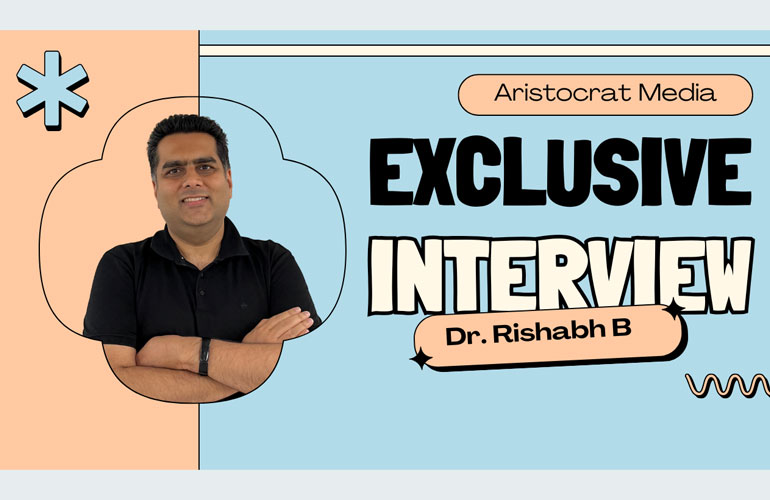
Bridging the Gap Between Doctors and Patients
About Dr. Rishabh Bhandari:
Dr Rishabh Bhandari is a doctor and has an MBA from ISB. He is the Founder and Technology lead of Medisha Technologies Private Limited (better known as Medisha.com). During his career of nearly 20+ years, he has held positions in healthcare, technology, analytics, AI, finance, and consulting and brings his experience across domains to build this transformative initiative.Q. The challenge of reading doctors’ handwriting is a long-standing joke — but also a serious issue. What inspired you to tackle this problem using AI?A: Contrary to popular belief, a doctor doesn’t want to write bad. Doctors struggle with too much work and too little time. Need for documentation has escalated over past decades demanding even more time. Good handwriting has obviously taken a back seat.
In past, there have been many attempts to streamline medical work-flow but with push for typing into an electronic system reduces efficiency by further 30% according to anecdotes. I am a doctor myself who has been in technology and wanted to ease this burden.
Difficult or not, easing the data capture process is essential to unburden our doctors and help them focus on patients instead of spending inordinate time on documentation.
Q. Can you walk us through how AI recognizes and converts complex handwritten medical notes into digital, readable formats?A: Our customers usually trigger the process by capturing pictures of medical documents using a smartphone or a scanner.
Our AI then looks at strokes and curves to identify what’s written. We combine the visual cues with surrounding context and then our AI, which has been trained on handwriting of Indian Doctors, produces the digital text.
Interestingly the context helps like it helps us. As an example, the letter ‘d’ written is cursive is practically identical to how we write ‘cl’. So, it is easy to confuse a “dot” with a “clot” if we are only looking at form and shape. But with surrounding context we can clearly identify that “dots” don’t appear in arteries, the word is more likely to be “clots”.
With all the AI jugglery, in under a minute, the handwritten page is translated into human readable and AI analyzable text.
Q. How does this technology improve daily efficiency for doctors and healthcare staff? Does it integrate easily with hospital record systems or electronic health records?A: This is an important question. Our job at Medisha is to use technology to make documentation and analysis easier.
For those with existing EMR systems, we provide an API to capture images and handwritten notes into the system. This helps simplify data entry into systems. It can be used on patient bedside or in the medical records departments where it can help in archival, search and electronic retrieval.
More than that, with the simplicity and cost-effectiveness we can digitize a paper heavy hospital rapidly. Once initial setup is done, the hospitals can continue to operate as they have been, just add a process to capture the paper records using a standard smartphone. All analysis and reports are AI generated. They can search for information and ask analytical questions, like capturing trends or analysing patterns. It is so much simpler and intuitive, whoever we have shown it to, absolutely loves it.
Q. For patients, what kind of real-world difference can this innovation make? Could it help reduce prescription errors or improve communication between doctors and pharmacies?A: First of all, it eases the burden of doctors when to comes to typing information. On-the-fly analysis and reviews are easier and saves time. With ready analysis at hands, doctors can take cleaner and better-informed decisions. Beyond transcription, it can also be called an AI powered CDSS (Clinical Decision Support System). With time saved from documentation and reviews, doctors can see more patients and spend more time for better care, with overall cost also coming down. We aim to improve the trifecta of all operational metrics – cost, quality and time leading to cheaper, faster, better health for Indian hospitals.
Additional benefit from data capture is availability of this information for future research. This is also sorely needed in Indian health ecosystem.
Q. Handwriting styles vary widely — even among doctors. What challenges do developers face when training AI to understand such unpredictable writing?A: Yes. There is a wide variety of handwriting and we cannot hope to cover everything. However, we have found that once doctors start using our system, their handwriting improves! Since they now have more time now, they can write cleanly and legibly. There is also motivation to do so since it makes the system more effective. We also keep training our AI to recognize the difficult patterns over time. It is a human-AI partnership that evolves as the system gets adopted and improves with time.
There is a famous adage in medicine that the “treatment should be better than the disease”. Today’s forced typing mandates or writing in block letters squeeze even more of the very limited time doctors have. By easing the documentation burden while enhancing its effectiveness we aim to improve the status-quo and “solve” it.
Q. Looking ahead, how do you see handwriting recognition evolving in healthcare? Could this lead to a future where all medical documentation is seamlessly digitized and error-free?A: I wish I had a crystal-ball.
There are a lot of activities that were earlier performed by people but ultimately relegated to machines and we have evolved as a race. My hope is that the same happens to medical documentation.
While the current push in India is to adopt decades old legacy systems that originated in the West (and which are still expensive and ineffective), we have an opportunity to leapfrog into an AI powered age without the growth pangs. Even the west is adopting AI now and we should probably accelerate in that direction.
I look forward to the day when doctors don’t need to type or speak into a microphone. They just follow what they do, provide the best care, and documentation takes care of itself, reliably and efficiently. I am committed to that goal and my organization will keep working tirelessly. I hope that we create a model, a standard, that the West can aspire to follow.
Disclaimer: The views and opinions expressed in this interview are those of the author and do not reflect the official position of any medical body or organization. However, the insights shared are based on over a decade of working experience in the healthcare sector start-ups. Readers should consult with a qualified healthcare professional for medical advice or information related to their specific situation.

Please follow our page Aristocrat Media for more updates
For Enquiries connect us on:
marketing@aristocrat-media.com
Leave a Comment