
Spine Health: The Key to Active Aging
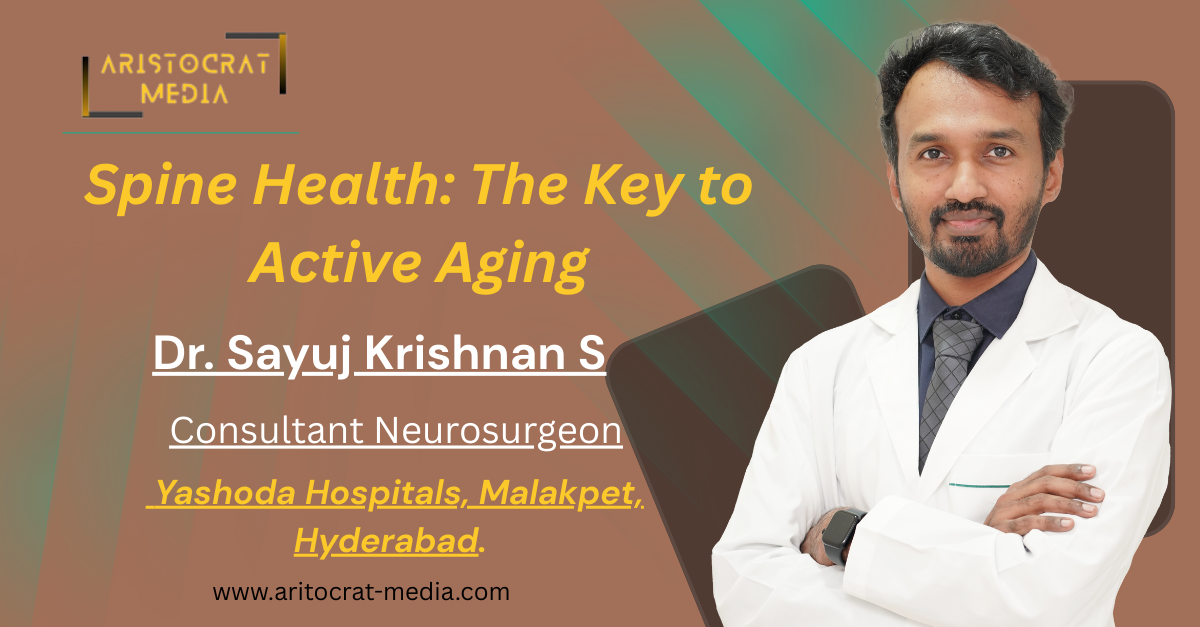
Spine Health: The Key to Active Aging
Dr. Sayuj Krishnan S, Consultant Neurosurgeon at Yashoda Hospitals, Malakpet, Hyderabad.
Growing older is a natural process, but it doesn’t necessarily have to bring pain. With age, the stress and strain we placed on our spines during our younger years often begin to show up as discomfort, stiffness, and aches. This makes spinal health a key part of overall well-being and mobility in later life. While ageing means different things to different people, one common thread is that older adults today want to remain active and live fuller lives. Many men and women entering their senior years dream of traveling, hiking, motorcycling, and enjoying other adventurous activities.
A strong and healthy spine is the foundation for maintaining energy, independence, and enthusiasm for these pursuits. Without good spinal health, many of these activities become difficult or even impossible. Below are some practical ways to support your back and spine:
- Stay Physically Active Consistent exercise is vital for spinal health. It delivers oxygen and nutrients that aid healing, reduces inflammation, strengthens the core, improves flexibility, and helps manage weight. Low-impact activities such as walking, swimming, and cycling are especially beneficial because they boost circulation, support spinal discs, and gradually build strength. Beginners should start slowly, stretch before and after workouts, and use simple fitness tools to track progress.
- Warm Up and Cool Down Though often overlooked, warming up and cooling down are crucial for protecting the spine. A 5–10 minute warm-up raises heart rate, improves blood flow, loosens muscles, and prepares the back, legs, and core for activity—helping to prevent strains and injuries. Light movements like jogging in place or dynamic stretches are effective. Cooling down for 5–10 minutes after exercise helps the heart rate return to normal, reduces stiffness, clears lactic acid, and enhances flexibility. Stretching during this stage supports long-term mobility and reduces spinal stress.
- Strengthen the Lower Body Strong hips, glutes, and hamstrings are essential for supporting the spine. They stabilize posture, align the pelvis, and reduce pressure on the lower back. Weak or tight muscles, especially hamstrings, can strain the spine and cause pain. Exercises such as squats, lunges, and hip thrusts, combined with regular stretching, improve flexibility and help prevent lower back problems.
- Practice Good Posture “Stand up straight” is advice we often heard in childhood, but it’s easy to forget as adults. Maintaining upright posture is one of the simplest ways to protect spinal health over time. Sedentary lifestyles, long hours at computers, and casual sitting habits can lead to misalignment. Aim to keep your back neutral when walking, sit upright at your desk, and avoid slouching. Whether standing, sitting, or moving, gently tuck in your pelvis to stabilize your spine.
- Eat a Balanced Diet Strong vertebrae depend on nutrients like calcium, vitamin D, and potassium. If diet alone isn’t enough, supplements may help. Diet also plays a major role in reducing inflammation, which is linked to conditions such as diabetes, arthritis, heart disease, and back pain. Chronic inflammation can cause swelling in muscles, ligaments, and discs around the spine, leading to stiffness and discomfort. An anti-inflammatory diet can ease pain, improve bone and joint health, and lower these risks. Foods rich in omega-3s (like salmon and walnuts), along with nuts, olive oil, yogurt, leafy greens, berries, turmeric, and ginger, are especially beneficial for spinal health.
Disclaimer: The views and opinions expressed in this interview are those of the author and do not reflect the official position of any medical body or organization.
The author is not a medical doctor; however, the insights shared are based on over a decade of working experience in the healthcare sector start-ups.
Readers should consult with a qualified healthcare professional for medical advice or information related to their specific situation.

Please follow our page Aristocrat Media for more updates
For Enquiries connect us on:
marketing@aristocrat-media.com
Leave a Comment