
Regular Colonoscopy Can Detect Silent Colon Cancer Risks.
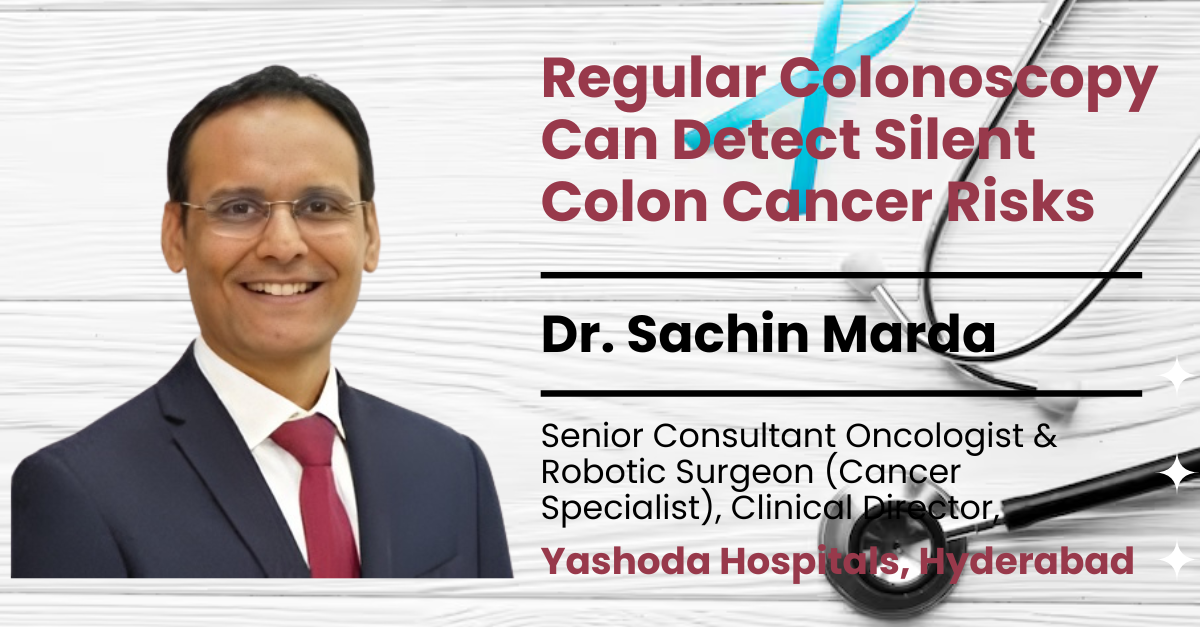
Regular Colonoscopy Can Detect Silent Colon Cancer Risks.
A 60‑year‑old man from Sikkim went to the hospital because he was feeling tired and losing weight without knowing the reason. His blood test showed dangerously low haemoglobin levels of 6.5 g/dL, which turned out to be silent internal blood loss rather than simple weakness.
Further examinations of his stool, conducted by local physicians, revealed occult blood — a clue that he had been losing blood through his stools for months without showing any symptoms. A colonoscopy gave a shocking observation: the presence of many polyps throughout his gut.
After being referred to Yashoda Hospitals Yashoda Hospitals in Hyderabad, a thorough examination revealed that similar intestinal problems ran in his family. His sister and an elderly relative were reported to have the same illness. Genetic testing confirmed Familial Adenomatous Polyposis (FAP), a condition that causes hundreds of polyps in the colon and greatly increases the risk of colorectal cancer if diagnosis and treatment are delayed.
The surgical team performed an advanced laparoscopic total proctocolectomy to remove almost the entire colon where polyps had spread, preventing cancer from developing. To preserve natural digestion, surgeons avoided the need for a colostomy bag by creating an internal pouch from the small intestine. Following surgery, the patient made a full recovery.
We learnt two important lessons from this case :
1️⃣ Regular health examinations and colonoscopy screenings are crucial after the age of 50, since colon cancer can have hidden symptoms. Early screening & detection can prevent life‑threatening consequences.
2️⃣ Family history is important. About three to five percent of colorectal cancers are inherited. To identify problems before they develop into cancer, family members of patients with hereditary disorders must be screened promptly.
It has now been suggested that the patient’s entire family should undergo regular colonoscopies beginning at the age of 25, which could save many lives in the next generation.
This reflects that knowing your family’s cancer history helps identify colorectal cancer risk. Tracing first‑ and second‑degree relatives offers vital clues. A family history doesn’t guarantee cancer, but it guides early screening. Colonoscopies can detect and remove precancerous polyps. Even without family history, regular checkups and attention to body changes remain essential.
Disclaimer: The views and opinions expressed in this interview are those of the author
and do not reflect the official position of any medical body or organization.
The author is not a medical doctor; however, the insights shared are based on over
a decade of working experience in the healthcare sector start-ups.

Readers should consult with a qualified healthcare professional for
medical advice or information related to their specific situation.

Please follow our page Aristocrat Media for more updates
For Enquiries connect us on:
marketing@aristocrat-media.com
Leave a Comment